
Composite
Composite decking
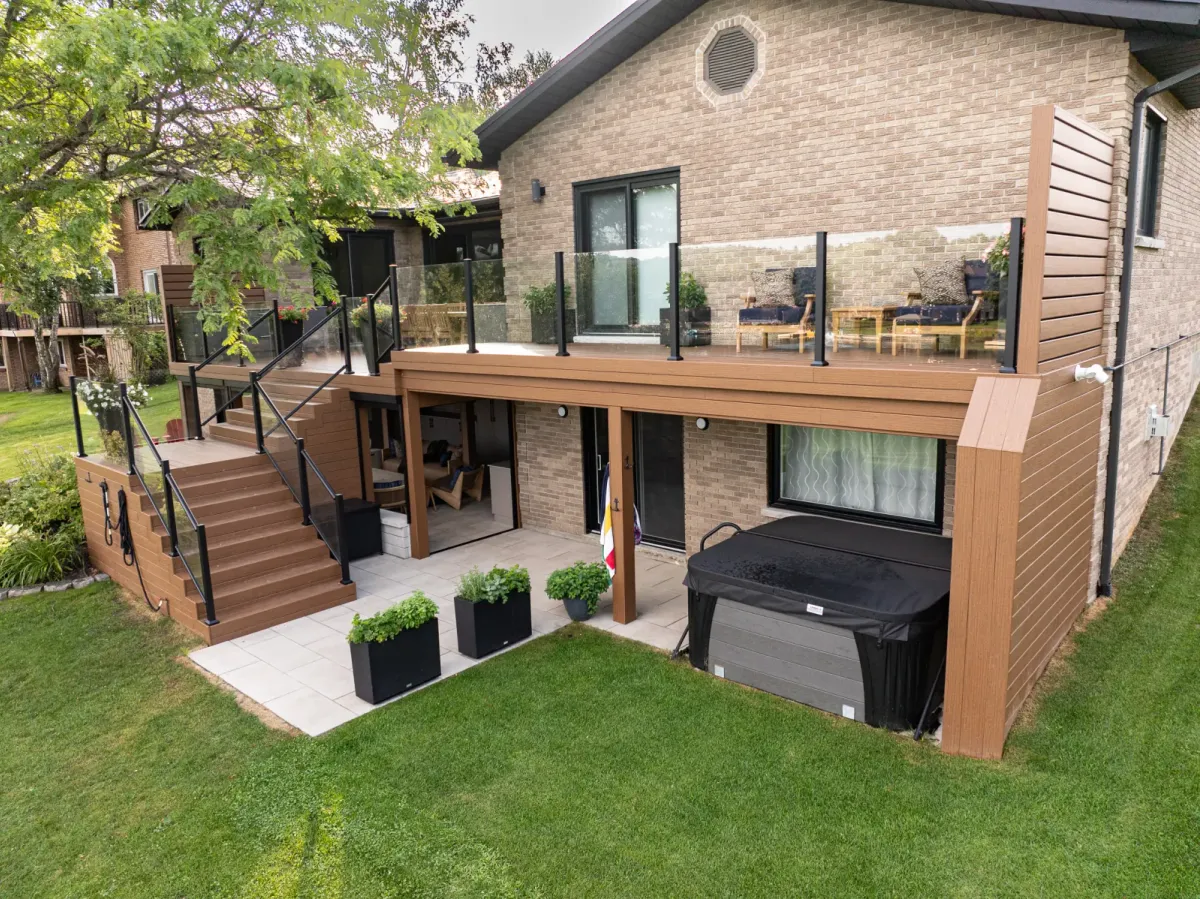
Wood flour bound in recycled polymer under a protective cap. The default low-maintenance board, and the widest price range on the shelf.
Hub page
Boards and railings shape the appearance, cost and routine care of your deck. Start with the family, read the guide behind it, then price the package.
Wood flour bound in recycled polymer under a protective cap. The default low-maintenance board, and the widest price range on the shelf.
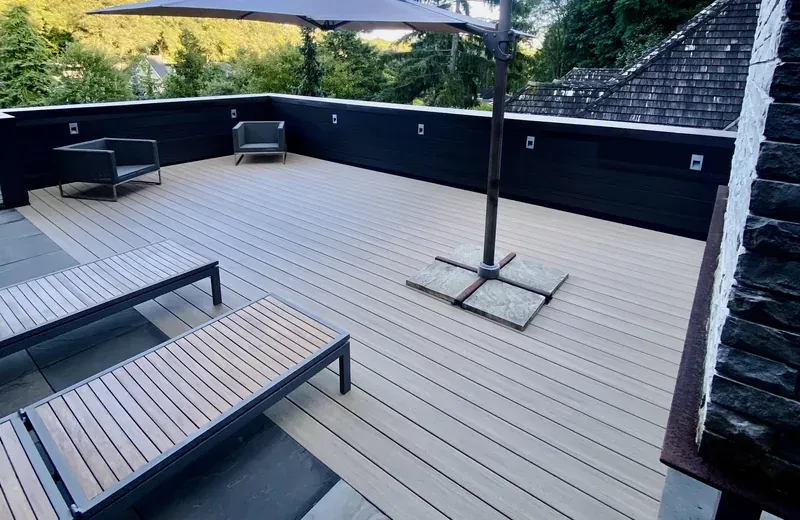
Fully synthetic boards with no wood flour. Different behaviour around water, different surface heat, and much smaller installation gaps.
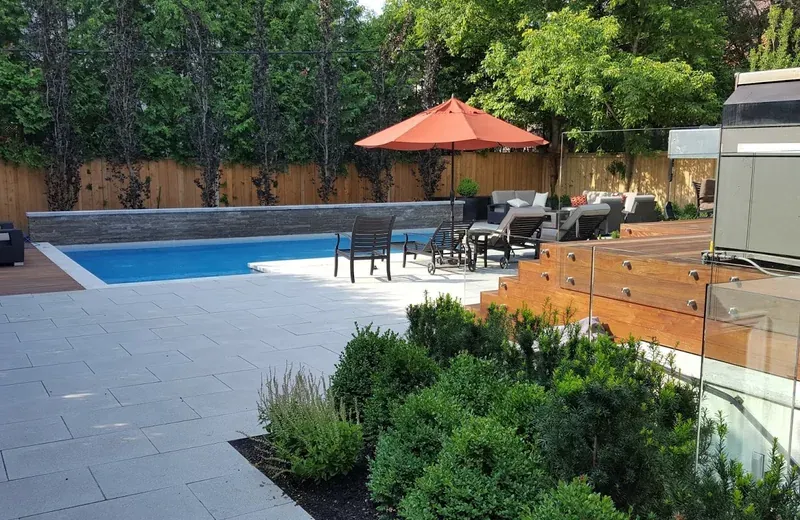
Pressure-treated softwood through to Ipe and cumaru. Warmer underfoot and cheaper to start, in exchange for a maintenance cycle that never ends.
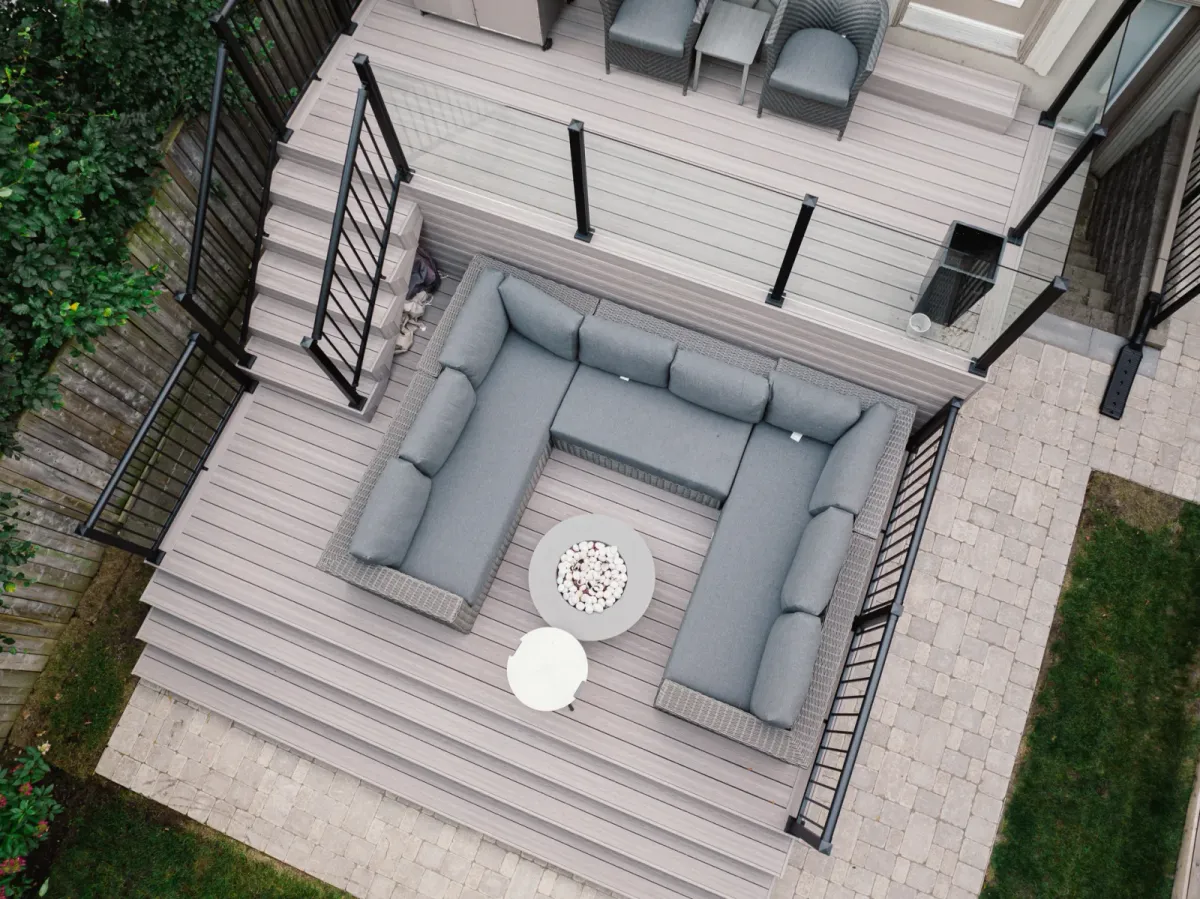
Aluminum, glass, composite and cable systems — often as large a budget line as the boards, and the part the Building Code is strictest about.
Qualitative comparison for shortlisting. Every claim here is carried in full, with its sources and its date, on the guide linked at the bottom of each column — exact pricing depends on the line, colour and current stock, which is what the quote is for.
| Factor | Capped composite | Cellular PVC | Pressure-treated | Tropical hardwood | Larch and cedar |
|---|---|---|---|---|---|
| What it is | Wood flour and recycled polymer, under a cap | Foamed PVC and fillers, no wood flour | Softwood treated with preservative | Dense tropical species — Ipe, cumaru | Softwood: larch, cedar, thermally modified |
| Relative upfront cost | $ to $$$ | $$ to $$$$ | Lowest board cost | Premium | Mid-range |
| Warranty or durability rating | 25 to 50-year limited residential, by collection | Lifetime limited product and 50-year fade and stain on the main lines | No comparable product warranty; life depends on treatment and upkeep | No warranty — Ipe and cumaru are rated very durable | No warranty — larch heartwood rates moderately durable at best |
| Upkeep | Wash it. Never oil, stain or seal — a coating can void the warranty | Same: wash only, with a different brush | Clean, then re-stain or re-seal on a cycle | Oil to hold the colour, or let it silver | Oil every face before installing, then re-coat |
| Surface heat in full sun | Warms up; darker colours get hotter | TimberTech publishes up to 30°F cooler than many composites — the colour rule still applies | Warms up; dark stains raise it | Dense and dark boards hold heat | Warms up; dark oil finishes raise it |
| Ontario winter | Cannot rot, but end gaps are set by the temperature on install day | Same, with far smaller gaps — and boards must come out of water that freezes | Movement and surface checking are normal | Moves with the seasons; pre-drill everything | Depends on the coating being maintained |
| Read first | Composite hub | PVC vs composite | Wood vs composite | Ipe guide | Clear larch guide |
Cost symbols follow TimberTech's own published banding for its two materials; the wood columns are typical market ranges, not a quote. Live board prices for each family are in the next section.
Live Composite Deck Shop board prices for the families in the table above, from an entry board to a premium one. Pick a colour or size to see its board lengths.
Pressure-treated softwood and cedar are lumberyard goods and are not priced here.
Composite Deck Shop prices as of Sep 29, 2026 · CAD, before tax and delivery
Board prices only, per board as sold. Framing, fasteners, fascia, stairs, railings, waste and delivery sit on top — see what a material package has to cover below.
Every material this hub names has its own guide or comparison.
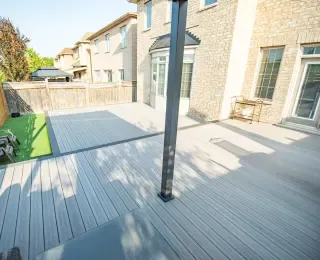
Brands, board tiers, and what the cap does and does not protect.
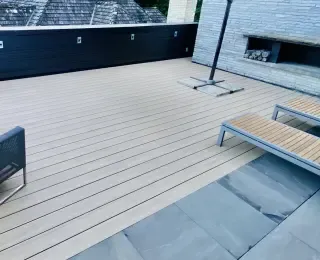
Water, heat, movement, gapping and price band against capped composite.
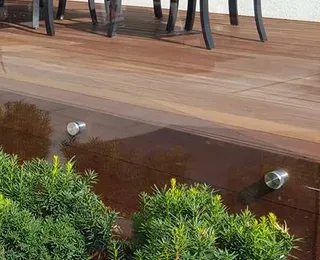
Density, CITES paperwork, fasteners, oiling and what it costs in labour.
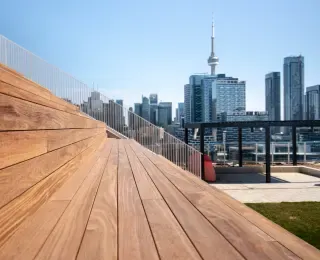
The honest Ipe alternative: hardness, sourcing status, installation and care.
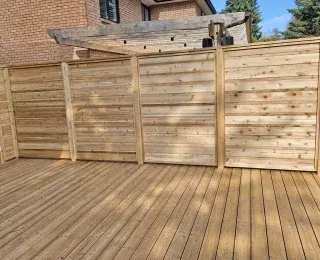
Species and grading clarity, durability class, and the sourcing problem.
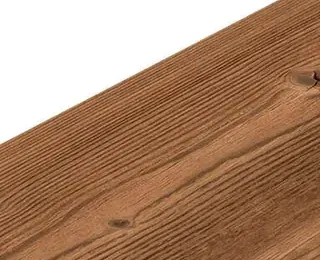
Lunawood and thermal red oak: what the heat buys, what it costs, and the clearances it needs.
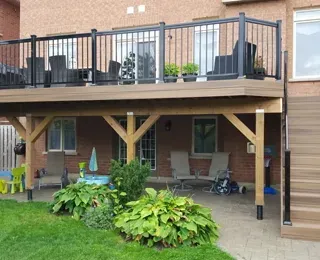
Covered in the umbrella comparison: what treatment costs the frame in span, the handling and cleaning rules, and where it still makes sense.
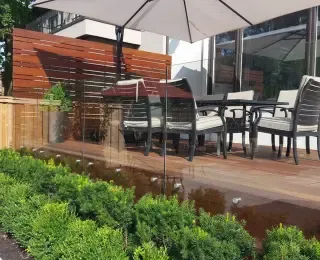
Guard rules, system types, and where the budget actually goes.
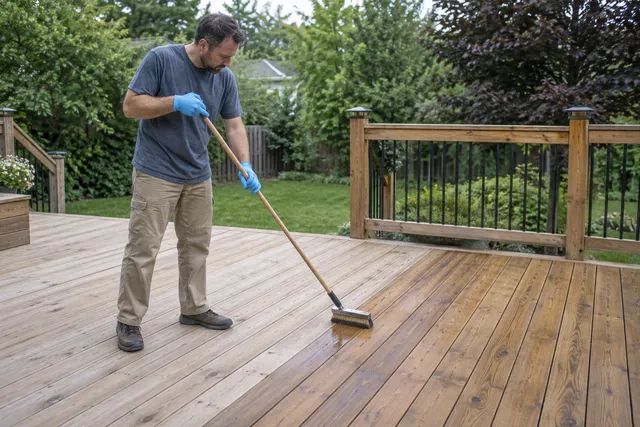
Which materials are oiled, which must never be, and Ontario disposal rules.
Once the material family is settled, the brand decides colour range, profile, cap coverage and warranty document.
Two composite ranges compared collection by collection, with the warranty fine print.
One brand, two materials: where Advanced PVC earns its price and where Composite is enough.
Line by line, including which boards are published for water contact.
Choosing a board is one of four decisions, and the other three change what the board costs to install. Our material checklist walks the whole order line by line, in the sequence the choices lock each other in.
Boards are not structural. Joist spacing, blocking and the fastener system are decided by the board you choose, not after it.
Height, opening size and climbability are code questions, and glass systems need the manufacturer's engineering.
Wood gets oiled on a cycle. Composite and PVC get washed — coating them is how warranties get lost.
Boards are rarely half the budget once framing, stairs, railings, waste and delivery are in.
Use the guides above to settle composite, PVC or wood, and choose a railing direction.
Send your deck size through the quote form, or order samples and test the colours outside first.
Purchasing, current pricing and delivery happen at our partner store — with your package already scoped.
On paper, capped composite and PVC: their manufacturers advertise 25-year to lifetime limited residential warranties, and neither can rot. Ipe and cumaru are rated very durable and can outlast their owners outdoors, but only as wood does — moving, greying and needing oil if you want the colour kept. Pressure-treated softwood is the shortest-lived of the group without a diligent maintenance cycle. Remember that a warranty term is a coverage period with exclusions, not a promised service life.
Composite has wood flour in the core; PVC has none. That single difference drives most of the rest — PVC has no wood core but surface dirt can still support mould, composite can bleed tannins in its first season, and the two materials need very different gaps at board ends depending on the temperature the day they are installed. Prices overlap heavily, so the material rarely decides the budget on its own. The PVC vs composite guide works through all of it with the manufacturers' and Canada's own published figures.
If you plan to stay in the home and do not want to re-stain a deck every couple of years, usually yes: the upfront premium buys away most of the maintenance cycle. If the budget rules, pressure-treated still builds a sound deck — it just moves the cost from the day you build it to every second or third spring after.
No, but boards, fascia and hidden fasteners from one system usually fit together better, and railings often come from a different manufacturer entirely. A material quote is the practical way to check compatibility before anything is ordered.
DecksToronto does not sell anything — it is the educational side of the business. Current stock, pricing and delivery live at Composite Deck Shop, our partner store. Samples are free to collect at any of its four Ontario stores and at Magasin de Patio near Montreal, or $20 flat for the set shipped to you, and our sample page starts the request. Test them outside, on your own site, in the sun: colour and heat behave differently outdoors than under showroom lighting.
Boards, railings, fasteners and delivery — one itemized quote in Canadian dollars, based on your deck size and city.