

Quick answer: aluminum picket is a practical starting point for an open, lower-upkeep guard; framed glass preserves more of the view; frameless glass minimizes visual interruption; wood offers site-built character; composite/PVC creates a heavier coordinated profile; and steel or cable can suit a specific architectural look. None is automatically right—or code-compliant—without the complete system and project conditions.

The old DecksToronto page substituted a rounded imperial height threshold and treated horizontal cable as universally prohibited. Those shortcuts have been removed. Ontario evaluates the guard’s location and geometry: horizontal elements and cable layouts need system-specific review for openings, climbability, tension, and end-post loads—not a blanket approval or ban.

Compare deck railing materials
Compare the exact system you can buy and install, not just the material name. A framed glass guard and a frameless base-shoe system, for example, have very different substrates, hardware, cleaning needs, and costs.
If the choice has already narrowed to metal, that decision has its own guide: iron versus aluminum deck railings covers what “iron” actually means on a deck now, why the coating rather than the metal decides how a guard ages, and what the manufacturers who sell both publish about corrosion, salt, and maintenance.
| System | Good fit when | Plan around | Upkeep pattern |
|---|---|---|---|
| Wood | You want a site-built, repairable look that can match the deck. | Custom labour, movement, checking, fastener condition, and regular inspection. | Clean and refinish on the coating schedule; repair damaged sections. |
| Aluminum picket | You want an open guard with a light profile and no routine painting. | Finish suitability, salt exposure, post spacing, mounting method, and visible picket rhythm. | Wash as required and inspect coating, connections, and fasteners. |
| Steel | You prefer a slim or substantial metal profile and a defined architectural character. | Weight, coating damage, corrosion exposure, and local availability of the complete family. | Inspect the finish and repair damage using the manufacturer’s method. |
| Composite / PVC / vinyl | You want a thicker profile that coordinates with capped decking. | Visual mass, reinforcement, expansion, infill compatibility, and a narrower local assortment. | Clean without painting; follow the exact system’s care instructions. |
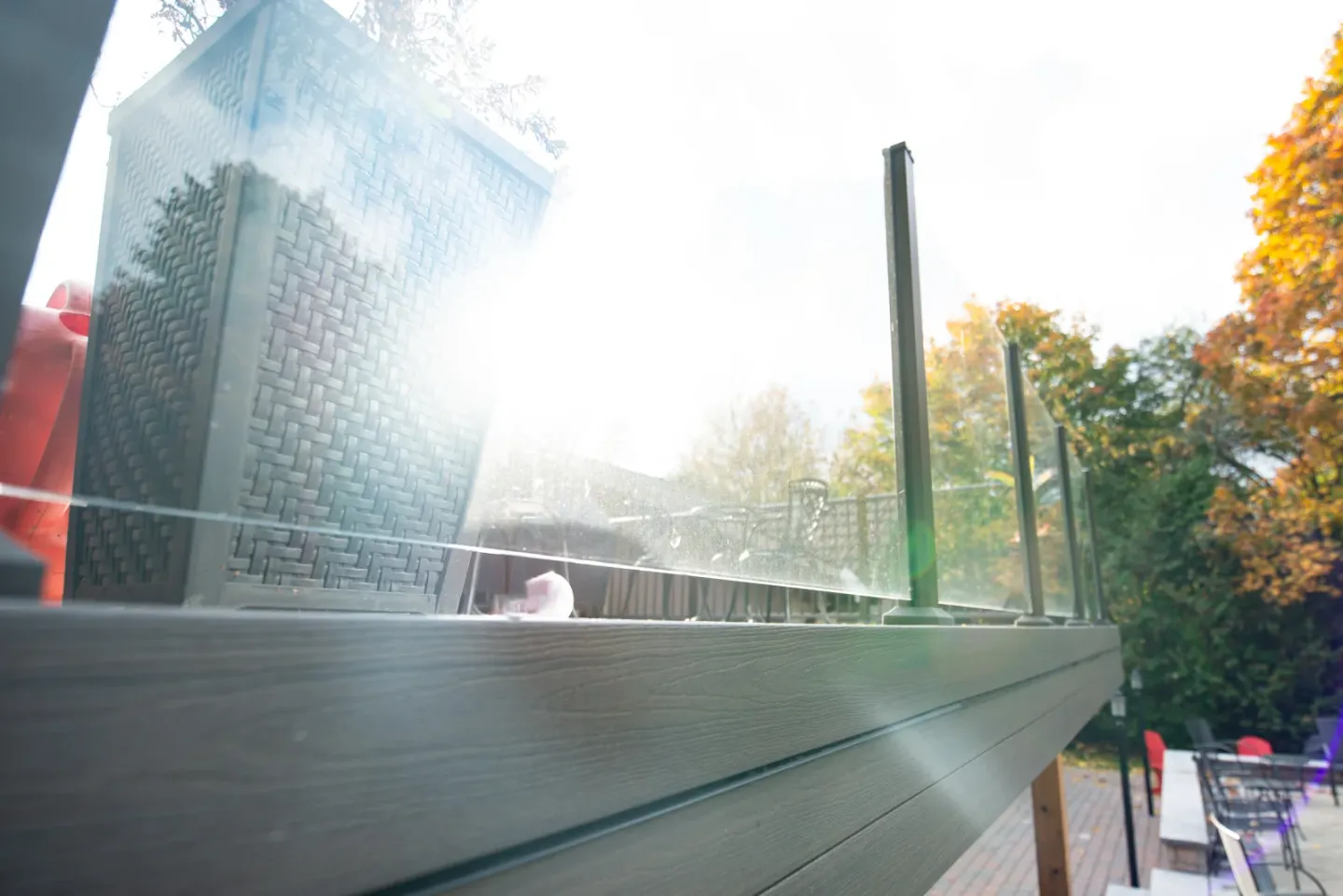
| Framed glass | You want a clearer view while accepting visible posts and rails. | Safety glazing, panel sizes, glare, bird visibility, wind perception, and regular cleaning. | Clean both sides and inspect gaskets, rails, posts, and hardware. |
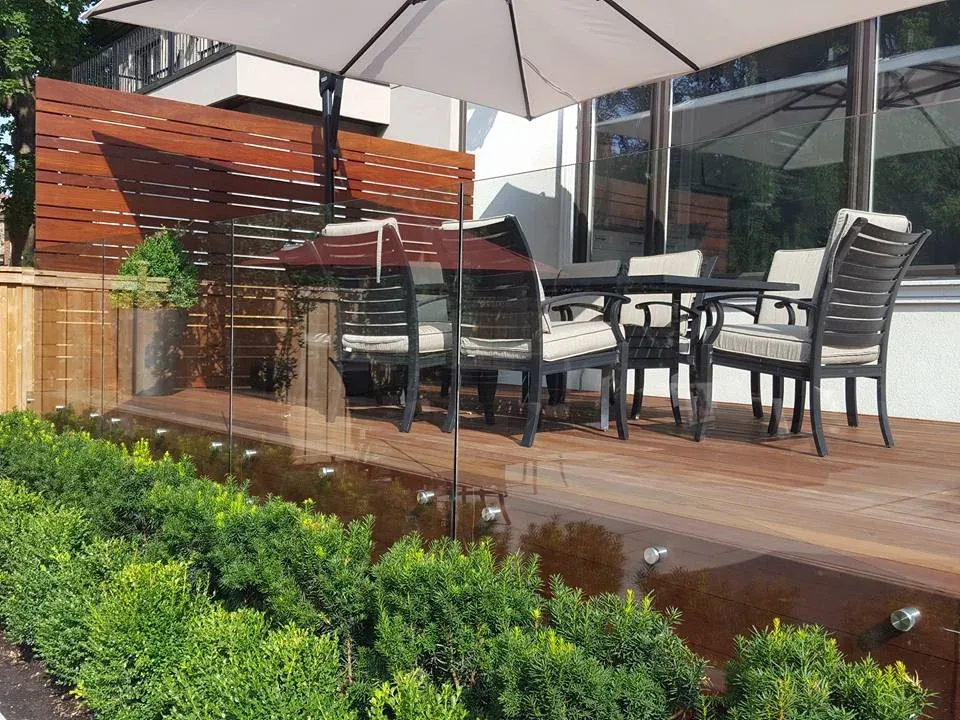
| Frameless glass | The least-interrupted view justifies site-specific detailing and a higher allowance. | Substrate, base hardware, edges, drainage, glass specification, engineering, and access for cleaning. | Frequent glass cleaning plus hardware and sealant inspection. |
| Cable | You want a light horizontal or vertical line from a documented complete system. | Opening size, climbability, tension, end-post loads, corrosion grade, and manufacturer instructions. | Inspect cable tension, fittings, posts, and surface condition. |

For a deeper look at framed and frameless options, cleaning, visibility, and privacy trade-offs, read the glass railings guide.
Choose by the outcome you want
Preserve a view
Start with framed or frameless glass, then decide how much frame and cleaning you accept. See the glass railings guide.
Plan aroundSlim pickets, rods, mesh and cable also keep a view open without a solid glass plane. Weigh glare, wind perception and bird visibility.
Add privacy
Plan privacy screens only where needed, separately from the code-required guard.
Plan aroundOpaque or frosted infill needs its own review of wind load, panel height, property-line rules and the supporting structure.
Reduce routine finishing
Choose powder-coated aluminum, documented steel, composite/PVC or glass — and still plan cleaning and inspection.
Plan aroundRoad salt, pools, waterfront exposure, cut edges, coating damage and mixed metals change the care plan.
Coordinate with the deck
Match undertone and profile weight, not exact colour; review full-size samples outdoors.
Plan aroundA slim black metal guard recedes; a composite top rail repeats the deck colour; wood can carry a custom detail.
Children and pets
Avoid footholds, confirm gates and latches, and think about furniture placement.
Plan aroundAdd no mesh, panels, planters or accessories unless the system designer confirms the detail.
Plan the complete railing budget
A useful comparison prices the complete guard: straight runs, stairs, corners, posts, mounting hardware, gates, blocking, glass, freight, demolition, access, drawings or engineering, labour, and tax.
Three defined calculator choices
DecksToronto’s current calculator uses project-planning allowances per selected foot. These are not retail component prices, universal installed rates, or a quote for every site. HST is calculated separately.
Open calculator at railing choices- Aluminum picket
- $100/selected ft
- Aluminum + glass
- $150/selected ft
- Frameless glass
- $250/selected ft
Wood, steel, composite/PVC, cable, gates, custom colours, unusual heights, and non-standard exposure remain quote-only until the exact system and scope are known. A low part price can still produce a higher total when stairs, corners, labour, or substrate work are substantial.
Installation and quote checklist
Choose a complete, evaluated system and follow its current instructions. Do not combine posts, rails, infill, brackets, fasteners, or glass from different families unless the responsible designer and manufacturers document that assembly. Our guide to installing a deck railing covers what holds a guard up at the post connection and which published numbers are ceilings rather than targets.
Confirm the project boundary
Record deck height, guard locations, stairs, landings, rooftop or pool conditions, and the municipality’s permit or drawing requirements.
Measure the geometry
Separate straight runs, stairs, corners, gates and transitions; note surface- or fascia-mount and any obstructions.
Verify the structure
Check the substrate and blocking suit the system’s posts, anchors, loads, edge clearances and water management.
Select one documented system
Match height, spans, posts, infill, glass, brackets, fasteners, gates and accessories to that family’s current instructions.
Check exposure and care
Tell the supplier about road salt, waterfront or pool exposure, snow storage, cleaning access and dissimilar metals.
Define the quote
Ask what covers takeoff, freight, custom glass, demolition, blocking, stairs, gates, touch-up, labour, drawings, engineering, permits and HST.
Read the warranty before comparing years
A headline term is not the whole warranty. Product structure, powder-coat finish, glass, cable, lights, gates, fasteners, residential versus commercial use, original purchaser, labour, salt or coastal exposure, installation, registration, and purchase date can all carry different terms.
- Get the current legal warranty for the exact product family and purchase date.
- Confirm whether finish, corrosion, labour, freight, removal, and reinstallation are covered.
- Keep the invoice, product labels, colour and lot details, approved drawings, installation guide, photos, and maintenance records.
- Do not treat “limited lifetime” as the same promise across every brand, component, setting, or owner.
For a worked example of exactly this, read what the metal railing warranties actually say in our iron versus aluminum guide: one Canadian manufacturer warrants the structure of a railing for twenty years and the powder-coat finish on the same railing for five, and both of the steel-and-aluminum warranties compared there exclude damage from ice-removal chemicals.
Brand and store context
Manufacturer ranges are broader than any one Ontario retailer’s assortment. Use the Composite Deck Shop collection for the current local catalogue, stock and prices, then confirm the exact manufacturer instructions and warranty before buying.
Fortress
Current Fortress families cover aluminum, steel, cable, and glass infill. Treat every rail, infill, bracket, fastener, and warranty as system-specific.
Trex
Trex currently presents metal, composite, glass, cable, mesh, and rod options. Not every manufacturer option is available in Canada or stocked locally.
TimberTech
TimberTech’s current range includes composite and metal railing families.
Century
Century presents Canadian-made picket, framed-glass, pipe, and Scenic glass systems. Jurisdiction and application still control whether a configuration can serve as a guard.
Fiberon
Fiberon documents its own railing families. Confirm Ontario supply before specifying one.
Useful sources
Building-code amendments, municipal interpretation, product families, warranties, and store availability can change; use these links again when the permit, design, and order are being finalized.
- Ontario — 2024 Building Code and current compendium filing date, plus the official Volume 1 compendium: guard triggers, heights, openings, climbability, loads, and safety glazing.
- Fortress, Trex Canada, Fiberon, TimberTech, and Century: current material and system context.
- Composite Deck Shop railing collections: the current Ontario catalogue, product details, prices, and checkout.
- DecksToronto deck cost calculator the three planning allowances shown above, read from the calculator’s own data, and its separate 13% HST treatment.